
Nikah is a beautiful word. It carries deep meaning in Islam. But what does it actually mean? Let’s break it down simply.
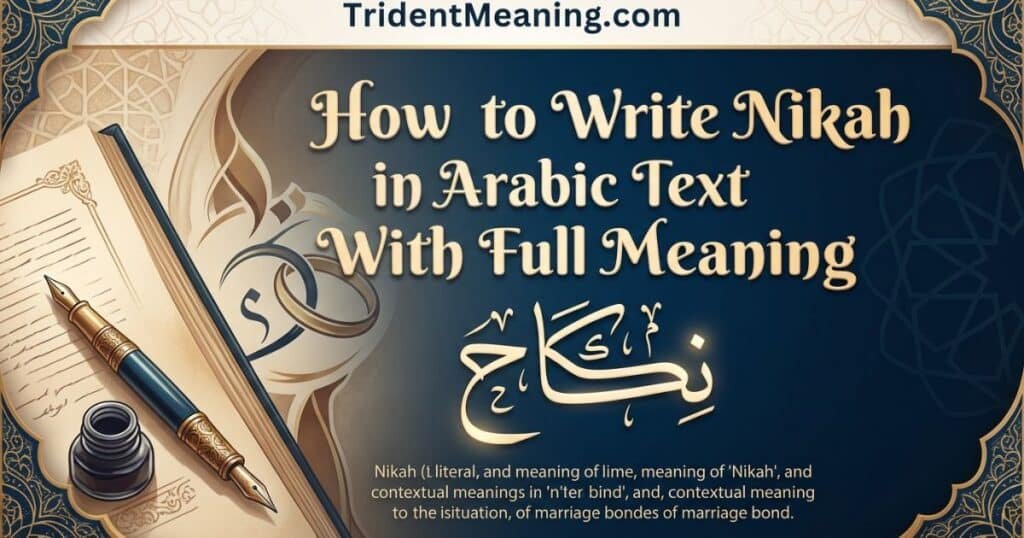
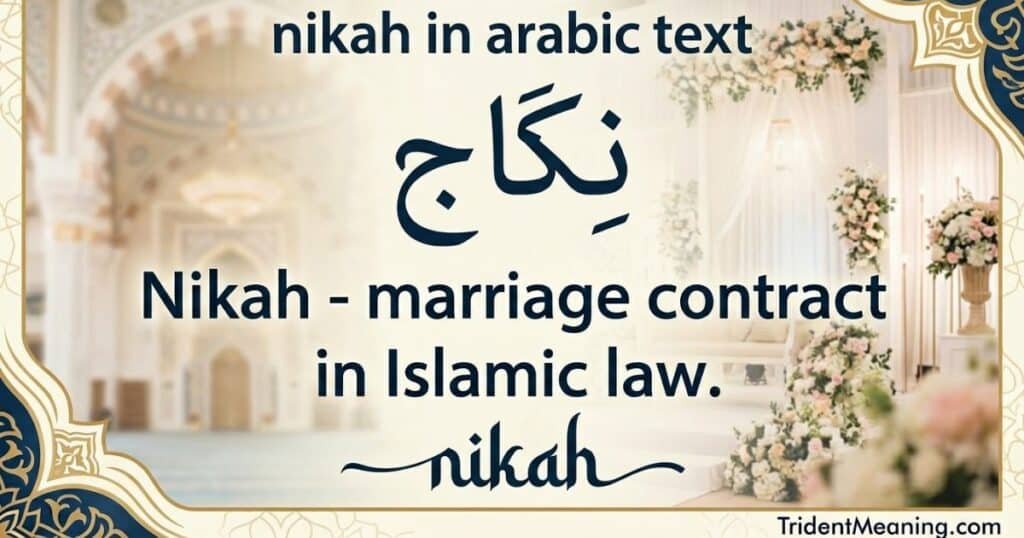
The word nikah in Arabic text is written as نِكَاح. This is the Arabic word for marriage. Many people search for nikah in Arabic to understand its roots. The nikah meaning goes beyond just a wedding. It’s a sacred bond between two souls.
Now, you might wonder , is it nikah or nikkah? Both spellings exist. However, “nikah” is the more accepted transliteration. In English, nikah in English simply means “marriage contract” in Islam.
Understanding nikah in Arabic text helps you connect with its true essence. It’s not just a word. It’s a covenant. A promise. A lifelong commitment rooted in faith and love.
What is Nikah in Islam?
The word nikah in Arabic text is written as نِكَاح. Understanding the nikah meaning in Arabic starts with its root. Arabic linguists actually debate its literal meaning. Some say the nikah definition Islam points to “the marriage contract.” Others argue it literally means “coitus” with “marriage contract” being metaphorical.
Imam Raghib Al-Isfahani (May Allah be pleased with him) believed nikah in Arabic language primarily refers to the marriage contract. He rejected the idea that it could realistically mean “coitus” [1]. However, Az-Zujaji (May Allah be pleased with him) argued both meanings are valid [2]. Imam Abu Al-Hasan ibn Al-Faris added that the nikah Quran reference Arabic always points to the marriage contract , except in one verse: “Test the orphans until they reach Nikah.” (Surah An-Nisa, ayah 6) Here, nikah in classical Arabic refers to marriageable age.
So what does nikah in Arabic text actually mean in Islamic law? Simply put, it’s the lawful contract between a man and a woman. It’s the only valid path to a halal relationship. Both parties must give full consent , called Ijab and Qabul. Two witnesses must be present. The Arabic text of the nikah ceremony confirms this contract publicly. The nikah agreement in Arabic text seals the bond between husband and wife in the sight of Allah.
The man typically says: نكحتك (nakahtuki) , meaning “I have married you.” The woman responds: قبلت (qabiltu) , meaning “I accepted.” This nikah recitation in Arabic is the heart of the entire ceremony. Short. Powerful. Binding.
The Virtue of Nikah in Islam
Islam guides every part of human life , and marriage is no exception. Allah سُبْحَانَهُ وَتَعَالَىٰ didn’t ignore the natural bond between men and women. He honored it. He says: “He is the one who created you from one soul and out of that soul, created his wife so that he may find comfort in her.” (Surah Al-Araf, ayah 189) That’s not just poetry. It’s a divine blueprint for companionship.
The Prophet ﷺ made nikah a Sunnah , and he emphasized it strongly. Aisha (May Allah be pleased with her) reported: “Nikah is from my Sunnah, so one who doesn’t follow my Sunnah is not from me.” (Ibn Majah, 1846) He didn’t just recommend it. He warned against abandoning it. In another narration, he said: “Four things are from the Sunnah of the Messengers: modesty, applying scent, using Siwak and Nikah.” (Jami’ Tirmidhi, 1080)
Understanding the meaning of nikah in Islam helps you see why scholars classify it as Sunnah Mu’akkadah under normal circumstances. But if a person fears falling into sin, nikah becomes wajib , or even fard. The Prophet ﷺ also said: “Marry loving and prolific women, for I will boast of you outnumbering over other communities.” (Mishkat-ul-Masabih, 3122) That’s how seriously Islam takes this sacred institution.
However, nikah in Arabic text can become unlawful in certain cases. If a man can’t financially support a wife, or fears he’ll be unjust toward her , he must reconsider. Islam always balances rights with responsibilities.
How to Select a Spouse in Islam
Choosing a spouse is the very first step of nikah in Arabic text. It’s not something to rush. Islam gives clear, practical guidance here. The Prophet ﷺ said: “A woman is married for four things: her wealth, her family ancestry, her beauty, and her piety; seek (success by choosing) a pious one, (otherwise) you shall be a loser.” (Sahih al-Bukhari, 5090)
Piety leads the list for a reason. A spouse with strong character and faith will hold the marriage together through every storm. Financial status, family background, and appearance all matter , but they fade. The character doesn’t. The Islamic matrimonial terms used by scholars always emphasize deen first, then everything else.
Islam also recognizes that people naturally live better with those similar to them. Shared values, lifestyle, and financial background all strengthen the marriage bond. This compatibility is called Kafa’ah in Arabic terms for Islamic marriage. However, it’s not a mandatory condition for a valid nikah. It’s a recommendation , not a requirement.
Who Can You Marry in Islam?
Islam sets clear boundaries on who is a valid marriage partner. Some women are permanently forbidden , called maharim. These include mothers, daughters, sisters, aunts, and foster relatives. Allah سُبْحَانَهُ وَتَعَالَىٰ says: “Forbidden to you are your mothers, your daughters, your sisters…” (Surah An-Nisa, ayah 23)
Some women are temporarily forbidden. For example, a man can’t marry two sisters at the same time. He also can’t marry a woman already married to someone else. These are clear rulings in Islamic marriage terminology that every Muslim must know before proceeding with nikah.
A Muslim man may marry a Muslim, Christian, or Jewish woman. A Muslim woman, however, may only marry a Muslim man. This rule protects the Islamic household and preserves the nikah structure as defined in full nikah script in Arabic and scholarly tradition.
Remember: Marrying a close relative outside the forbidden categories is permissible in Islam , though cultural norms vary. Always consult a qualified scholar if you’re unsure about a specific case.
What is Kafa’ah in Islamic Marriage?
Kafa’ah means “equality or sameness.” It’s a key concept in Islamic marriage terminology. If two people are equal in any meaningful sense, one is called the other’s Kufu. You’ll actually find this word in Surah Ikhlas , where Allah سُبْحَانَهُ وَتَعَالَىٰ says: “And none is equal to Him.” Same root. Same meaning.
In the context of nikah in Arabic text, Kafa’ah considers several factors. Piety, morals, financial status, beauty, and family ancestry all play a role. If a man matches the woman in these areas, he’s considered her Kufu. Scholars debated which factors matter most. Some say only piety and morals count. The majority, however, argue that Kafa’ah applies across all aspects of life , because the ahadith discuss it in general terms, not limited to religion alone [4].
Kafa’ah matters more for the woman than the man. Why? Because in Islamic society, the man leads the household. He should be at least equal , ideally superior , to his wife in key areas. Aisha (May Allah be pleased with her) reported that the Prophet ﷺ said: “Choose the best for your sperm, and marry compatible women and propose marriage to them.” (Ibn Majah, 1968)
In another hadith, the Prophet ﷺ warned: “When someone, whose piety and character pleases you, proposes marriage, then marry him. If you don’t do it, there will be mischief on earth and massive corruption.” (Jami’ Tirmidhi, 1084) That’s a serious warning. Don’t overlook character in the search for status.
Remember: Kafa’ah is strongly recommended but not a binding condition of nikah. However, if a woman marries someone who isn’t her Kufu, her wali has the right to object and nullify the marriage , even in Hanafi Fiqh [6].
Seeing Each Other Before Nikah
Islam is a practical religion. It doesn’t ask you to marry a stranger blindly. When a man finds a compatible woman and proposes , called Khitbah , both sides can proceed with marriage discussions. This includes seeing each other. Most scholars consider it Mustahab , desirable , for the man to see the woman he intends to marry.
The Prophet ﷺ said to Mughairah ibn Shu’bah when he proposed to a woman: “See her, because it would strengthen your love for each other.” (Jami’ Tirmidhi, 1087) That’s beautiful, isn’t it? Islam actively encourages emotional connection , but within proper boundaries.
What are those boundaries? The man may only look at the woman’s face and hands. Nothing more. This keeps the process respectful and dignified. The nikah ceremony Arabic terms around this stage , Khitbah, Ijab, Qabul , all reflect Islam’s careful, step-by-step approach to building a lasting marriage.
Remember: Seeing each other during the proposal stage is not a free mixing session. It must happen in a proper setting , ideally with the wali present , and must stay within Islamic guidelines.
The Role of Wali in Nikah
The word wali means “guardian, close friend, or relative.” In the context of nikah in Arabic, the wali is the bride’s guardian , the person authorized to give her in marriage. Usually, that’s her father. If the father isn’t available, it can be her grandfather, brother, or uncle.
The wali plays a critical role in Islamic marriage terminology. He’s responsible for finding a righteous, compatible husband for the woman under his care. This isn’t about control , it’s about protection. Islam recognizes that a woman deserves someone who genuinely looks out for her best interests. That’s exactly what the wali is meant to do.
Unlike Western norms where couples meet freely and marry independently, Islamic society channels this process through the wali system. The girl doesn’t go out searching alone. Instead, she trusts her father , or closest male guardian , to find someone suitable. But here’s the key: her consent is absolutely required. The wali finds. She approves. Both roles matter equally.
The Concept of Wali in Islamic Marriage
The majority of scholars hold that a woman cannot give herself in nikah in Arabic text directly. She must do so through her wali. The Prophet ﷺ said: “There is no Nikah but with (the permission) of wali.” (Abu Dawud, 2085) Aisha (May Allah be pleased with her) also reported: “Any woman who gets married without the permission of her Wali, her Nikah is void, her Nikah is void, her Nikah is void.” (Jami’ Tirmidhi, 1102) The repetition three times? That’s intentional emphasis in Arabic text for Muslim wedding traditions.
However, Imam Abu Hanifa (May Allah have mercy on him) held a different view. He argued that a mature woman has the authority to contract her own nikah [5]. He supported this with three key proofs. First, the verse: “She will not remain lawful for him unless she marries a man other than him.” (Surah Al-Baqarah, ayah 230) , which addresses the woman directly, without mentioning a wali. Second, the verse: “There is no sin on you in what they fairly do to themselves.” (Surah Al-Baqarah, ayah 234) , indicating her personal agency. Third, the hadith: “An unmarried woman has more right to herself than her Wali.” (Sahih Muslim, 3476)
Despite this scholarly difference, it’s still strongly advisable for a woman to involve her wali. As Umar ibn Al-Khattab (May Allah be pleased with him) said: “A woman should not marry without the permission of her Wali or an intelligent person from her family, or the ruler.” (Kanz-ul-Ummal, 45762) The wali knows the outside world. His experience protects her.
What If a Wali Gives a Girl in Nikah Without Her Permission?
This question is different from the one above. Previously, we discussed whether a woman can marry without her wali’s permission. Now we’re asking the opposite , can a wali give a girl a nikah in Arabic text without her consent?
The answer depends on two things. First , is the girl an adult or a child? Second , is the wali her father or grandfather, or a more distant relative like a brother or uncle? These details change everything.
If the girl is an adult, her wali cannot force her into nikah in Arabic text. The validity of the marriage rests entirely with her. If she approves, it stands. If she refuses, it’s void. The Prophet ﷺ made this clear when a girl came to Aisha (May Allah be pleased with her) and said: “My father married me to his brother’s son while I am unwilling.” The Prophet ﷺ heard her case and left the matter entirely up to her. (Sunan Nasai, 3273)
If the girl is a child, the nikah in Arabic text can be conducted. However, when she reaches adulthood, she has the right to reject it , but only if the wali was someone other than her father or grandfather. If her father or grandfather arranged it, she doesn’t hold that option. This ruling comes from the example of Aisha (May Allah be pleased with her), who was married to the Prophet ﷺ at a young age by her father, Abu Bakr Siddiq [7].
Remember: Islam always protects the woman’s dignity. Forced marriage , where an adult woman is given in nikah against her clear will , is not valid in Islamic law.
Deciding Mahr (Dowry) for the Bride
Once both parties agree and the wali gives his blessing, the next step is deciding the Mahr. Mahr is the gift of wealth the groom must give the bride. It’s not optional. Allah سُبْحَانَهُ وَتَعَالَىٰ says: “Give the women their Mahr in good cheer.” (Surah An-Nisa, ayah 4) Most scholars take this verse as clear proof of Mahr’s obligation in nikah.
There’s no upper limit on Mahr. Allah سُبْحَانَهُ وَتَعَالَىٰ says: “If you intend to take a wife instead of the other one you have, and you have given plenty of wealth, don’t take any of it back.” (Surah An-Nisa, ayah 20) The word used here , Qintarah in nikah in Arabic text , means “an enormous amount of wealth” [8]. So the sky is literally the limit. Both spouses agree on a reasonable amount based on their financial situation.
As for the minimum, scholars of the Hanafi school set it at ten Dirhams. Jabir ibn Abdullah reported that the Prophet ﷺ said: “There is no Mahr less than ten Dirhams.” (Baihaqi, 14773) Ali ibn Abi Talib (May Allah be pleased with him) also confirmed: “Mahr can’t be less than ten Dirhams.” (Sunan Al-Kubrah lil Baihaqi, 7/240) Other scholars, however, argue there’s no fixed minimum , anything with financial value can serve as Mahr [9].
Remember: Mahr is obligatory (wajib) but not a condition for the nikah to be valid. If the couple forgets to decide a Mahr, the nikah still holds. In that case, the bride receives Mahr Mithl , an amount equal to what the women on her father’s side received in their marriages.
Remember*: Shighar is strictly forbidden in Islam. This is where a man gives his sister or daughter as Mahr for another woman. Abdullah ibn Umar (May Allah be pleased with him) reported that the Prophet ﷺ explicitly forbade Shighar. (Sahih al-Bukhari, 5112)
Nikah Mut’a is Haram
The word Mut’a means “to enjoy something for a short period” [10]. In simple terms, Nikah Mut’a is a temporary marriage , where a man and woman agree to live together as husband and wife for a fixed period. One week. One month. Whatever the agreed term is.
Some scholars draw a distinction here. They argue that a marriage with a fixed time period, a set Mahr, and witnesses is called Nikah Muwaqqat , not Nikah Mut’a. According to them, true Nikah Mut’a involves no formal nikah wording and no witnesses [11]. Either way, both forms are problematic in Islamic law.
Some people argue that Nikah Mut’a is halal. They point to reports that some Companions (May Allah be pleased with them) practiced it during the Prophet’s ﷺ lifetime with his permission. But this argument doesn’t hold up under scholarly scrutiny. All four major Imams of Islamic Fiqh , unanimously , declared Nikah Mut’a haram equivalent to adultery [12].
Their proof? Allah سُبْحَانَهُ وَتَعَالَىٰ says in Surah Al-Mu’minun (verses 5–6): “(The believers are indeed successful) Those who guard their private parts, except from their wives or those owned by their hands.” A temporary wife in Nikah Mut’a doesn’t fit this description under Islamic legal standards.
The strongest proof comes from Ali ibn Abi Talib (May Allah be pleased with him), who narrated that the Prophet ﷺ forbade Nikah Mut’a and the meat of donkeys at the time of Khayber. (Sahih al-Bukhari, 4216) That prohibition was clear and final.
As for the hadiths that suggest the Prophet ﷺ permitted it , scholars explain that this permission was temporary. It applied to specific, isolated situations of extreme hardship. Just like drinking wine becomes permissible only when someone faces death by thirst , the permission for Nikah Mut’a was a rare exception, not a rule. The Arabic words إذن (Izn) and رخص (rakhasa) used in those hadiths indicate temporary permission , not permanent legalization [11].
Even if one accepts it was temporarily halal, the Prophet ﷺ himself abolished it , as confirmed in the hadith of Ali ibn Abi Talib (May Allah be pleased with him). That closes the discussion entirely.
Conditions and Pillars of a Valid Nikah
Every valid nikah in Arabic text rests on a firm foundation. Islam doesn’t leave this to guesswork. Scholars have clearly defined the conditions and pillars that make a nikah legally binding in Islamic law. Miss one , and the entire contract becomes questionable. Understanding these conditions is essential for every Muslim couple before they take this sacred step.
The pillars of nikah in Islamic marriage terminology are three: the Seeghah (the offer and acceptance), the Zawjain (the two spouses), and the Wali (the guardian). Each pillar carries its own set of conditions. Together, they form the complete nikah agreement in Arabic text that scholars recognize as valid across all major schools of Fiqh.
The Islamic wedding contract Arabic tradition also requires that the contract be free from all ambiguity. The words of Ijab and Qabul must be clear and direct. There can be no hidden conditions, no time limits, and no uncertainty. A nikah built on vague or conditional wording is not considered sound in the eyes of Islamic law.
What Are the Minimum Requirements for Nikah to Be Valid?
So what does nikah in Arabic text actually require at its bare minimum? Scholars agree on several non-negotiable conditions. Here’s what every valid nikah must have:
- Two parties , a man and a woman who are both legally eligible to marry each other
- Mutual consent , both must agree freely, without pressure or coercion
- Ijab and Qabul , the formal offer and acceptance, expressed clearly in past tense
- Two witnesses , both must be Muslim, adult, mentally sound, and present simultaneously
- Wali , the bride’s guardian must be present and give permission, according to the majority of scholars
- No forbidden relationships , neither party should fall into the category of maharim for the other
The nikah transliteration of the contract wording in Arabic must clearly convey the intent of marriage. The man says نكحتك (nakahtuki) , “I have married you.” The woman responds قبلت (qabiltu) , “I accepted.” That exchange, witnessed properly, forms the entire legal basis of the Islamic marriage contract.
Mahr is obligatory but , as discussed earlier , not a condition for validity. The nikah holds even if Mahr isn’t decided upfront. However, the bride’s right to Mahr Mithl remains intact regardless.
Remember: Both witnesses must be present at the same time during Ijab and Qabul. If one witness hears the offer and the other hears the acceptance separately , the nikah is incomplete. This is a critical detail many people overlook.
How to Perform the Nikah Ceremony Step by Step
The nikah ceremony Arabic terms can seem complex at first. But the actual process is beautifully simple. Here’s how a proper nikah unfolds step by step:
Step 1 , Nikah Khutbah The ceremony opens with the Khutbat-un-Nikah , a short sermon praising Allah سُبْحَانَهُ وَتَعَالَىٰ and invoking blessings upon the Prophet ﷺ. This is Sunnah and sets the spiritual tone for the entire contract.
Step 2 , Confirming Eligibility The officiant confirms both parties are eligible. He checks that no forbidden relationship exists between them and that both are entering the nikah freely.
Step 3 , Wali Presents the Bride The wali formally presents the bride and states his permission for the marriage. Without this step , according to the majority of scholars , the nikah is incomplete.
Step 4 , Ijab and Qabul This is the heart of the entire ceremony. The full nikah script in Arabic is spoken here. The groom says نكحتك (nakahtuki) and the bride responds قبلت (qabiltu). Both witnesses must hear this exchange clearly and simultaneously.
Step 5 , Announcing the Mahr The agreed Mahr amount is announced publicly. This protects the bride’s rights and ensures full transparency in the Islamic wedding contract Arabic process.
Step 6 , Dua and Blessings The ceremony closes with an Arabic dua for nikah , asking Allah سُبْحَانَهُ وَتَعَالَىٰ to bless the couple with love, mercy, and a righteous family. The Prophet ﷺ used to say: “May Allah bless you and shower His blessings upon you and join you together in goodness.” (Abu Dawud, 2130)
Remember: The nikah doesn’t require a grand venue, expensive decorations, or a massive crowd. Two witnesses, a wali, mutual consent, and clear Ijab and Qabul , that’s all Islam requires. Simplicity is Sunnah.
What Happens If Nikah Conditions Are Not Met?
This is where many people have serious concerns , and rightly so. If any of the essential conditions of nikah in Arabic text are missing, the contract becomes either fasid (irregular) or batil (void). These are two distinct categories in Islamic Fiqh.
A batil nikah is one that is completely void from the start. For example, if a man marries a woman who is already married , that nikah is batil. It never existed legally. No divorce is needed to end it because it was never valid.
A fasid nikah is one that was formed with a defect , but can potentially be corrected. For example, if the nikah was conducted without witnesses but all other conditions were met, some scholars consider it fasid rather than batil. The couple must either correct the defect or separate.
If a woman married without her wali’s permission , and her school of Fiqh requires it , scholars differ on the outcome. The Hanafi school gives her more personal authority here, as discussed earlier. But the majority position considers such a nikah void without the wali’s involvement.
Remember: If you’re ever unsure about the validity of a nikah , don’t guess. Consult a qualified Islamic scholar immediately. The rights of both spouses depend on getting this right.
Nikah Khutbah: The Marriage Sermon in Islam
Every nikah begins with words of remembrance. The Khutbat-un-Nikah , the marriage sermon , is a Sunnah of the Prophet ﷺ that opens the nikah ceremony with praise, gratitude, and divine guidance. It’s short. It’s powerful. And it sets the entire spiritual tone for what follows.
The nikah Khutbah typically begins with Hamd , praising Allah سُبْحَانَهُ وَتَعَالَىٰ. Then comes Salawat , sending blessings upon the Prophet ﷺ. After that, the speaker recites three specific Quranic verses. These are known as the Ayat-ul-Taqwa , the verses of God-consciousness. Allah سُبْحَانَهُ وَتَعَالَىٰ says: “O mankind, fear your Lord, who created you from one soul.” (Surah An-Nisa, ayah 1) This verse reminds the couple that their union originates from a single divine act of creation.
The second verse comes from Surah Al-Imran: “O you who have believed, fear Allah as He should be feared and do not die except as Muslims.” (Surah Al-Imran, ayah 102) And the third from Surah Al-Ahzab: “O you who have believed, fear Allah and speak words of appropriate justice.” (Surah Al-Ahzab, ayah 70–71) Together, these three verses anchor the nikah in taqwa , God-consciousness , from its very first moment.
Abdullah ibn Masud (May Allah be pleased with him) reported that the Prophet ﷺ taught the Companions this Khutbah and instructed them to recite it before nikah. (Abu Dawud, 2118) It’s not just tradition. It’s a direct prophetic instruction woven into the full nikah script in Arabic tradition.
The nikah Khutbah is Sunnah , not a condition of validity. A nikah without it is still valid. But leaving it out without reason means missing a beautiful prophetic practice that connects every Muslim wedding to the legacy of the Prophet ﷺ himself.
Remember: The nikah Khutbah should be delivered in Arabic for authenticity. However, it can be followed by a translation in the local language so the couple and guests fully understand its meaning and significance.
Rights and Responsibilities After Nikah
The nikah ceremony lasts minutes. The marriage lasts a lifetime. Once the Islamic marriage contract is signed and the nikah agreement in Arabic text is complete , a whole new set of rights and responsibilities begins for both husband and wife. Islam doesn’t leave this undefined. Every right is balanced with a responsibility. Every duty is matched with a privilege.
For the husband, financial responsibility comes first. He must provide nafaqah , food, clothing, and shelter for his wife. This isn’t optional. Allah سُبْحَانَهُ وَتَعَالَىٰ says: “And due to the wives is similar to what is expected of them, according to what is reasonable.” (Surah Al-Baqarah, ayah 228) He must also treat his wife with kindness, respect, and emotional care. The Prophet ﷺ said: “The best of you are those who are best to their wives.” (Jami’ Tirmidhi, 3895) That’s a direct standard set by the Prophet ﷺ himself.
For the wife, her primary responsibility is maintaining the home and raising children with Islamic values. She must also guard her husband’s honor and trust in his absence. The Prophet ﷺ described the best woman as: “One who pleases him when he looks at her, obeys him when he instructs her, and does not oppose him in a manner he dislikes.” (Sunan An-Nasai, 3231) Mutual respect runs through every part of this relationship.
Both spouses share the responsibility of building an Islamic household together. The nikah in Arabic text isn’t just a legal contract , it’s a covenant before Allah سُبْحَانَهُ وَتَعَالَىٰ. It demands honesty, patience, generosity, and continuous effort from both sides. A marriage built on these values doesn’t just survive , it thrives.
Remember: Islam gives the wife the right to seek Khul’ , a dissolution of marriage , if she genuinely cannot continue the relationship. And the husband holds the right of Talaq , divorce , but must use it responsibly and as a last resort. Rights exist on both sides. Always.
FAQ’s
What to Say in Nikah in Arabic?,
The groom says نكحتك (nakahtuki) and the bride responds قبلت (qabiltu). This completes the nikah in arabic text contract.
What is Correct, Nikah or Nikkah?,
Both spellings are used widely. However, nikah in Arabic text is the more accurate and scholarly accepted transliteration.
What Are the 4 Types of Nikah?,
Islam recognizes Nikah Sahih (valid), Nikah Fasid (irregular), Nikah Batil (void), and Nikah Mut’ah (temporary). Only Nikah Sahih is fully lawful. The foundation of every type traces back to nikah in arabic text.
Is 7 Marriages Allowed in Islam?,
No. Islam permits a man to marry a maximum of four wives only. Seven marriages are not allowed under any Islamic ruling.
What Are the 8 Types of Marriage?,
Pre-Islamic Arabia had eight marriage types. Islam abolished most and kept only the lawful nikah in arabic text contract as the sole valid form.
Can I Kiss My Wife’s Private Parts in Islam?,
Scholars differ on this. Many permit intimacy between spouses in private. Islam encourages love within marriage but discourages any act considered unnatural or harmful.
What is Nakaha in Arabic?
Nakaha (نَكَحَ) is the Arabic verb meaning to marry. It is the root word directly connected to nikah in arabic text , نِكَاح.
Conclusion
Understanding nikah in arabic text , نِكَاح , is truly important. It’s more than just a word. It’s a complete way of life. The nikah meaning covers marriage, commitment, and faith all at once.
Many people debate nikah or nikkah spelling. Both are acceptable. But the root always points back to nikah in Arabic , a sacred contract between two souls. In simple terms, nikah in English means “marriage contract.” Clean. Clear. Powerful.
Every Muslim should learn nikah in arabic text properly. It connects you to your faith deeply. The nikah in Arabic tradition has guided millions of couples for centuries. It builds families. It builds societies. It builds nations. Whether you say nikah or nikkah , the meaning never changes. It’s always about love, commitment, and living together under Allah’s blessing. Always.