

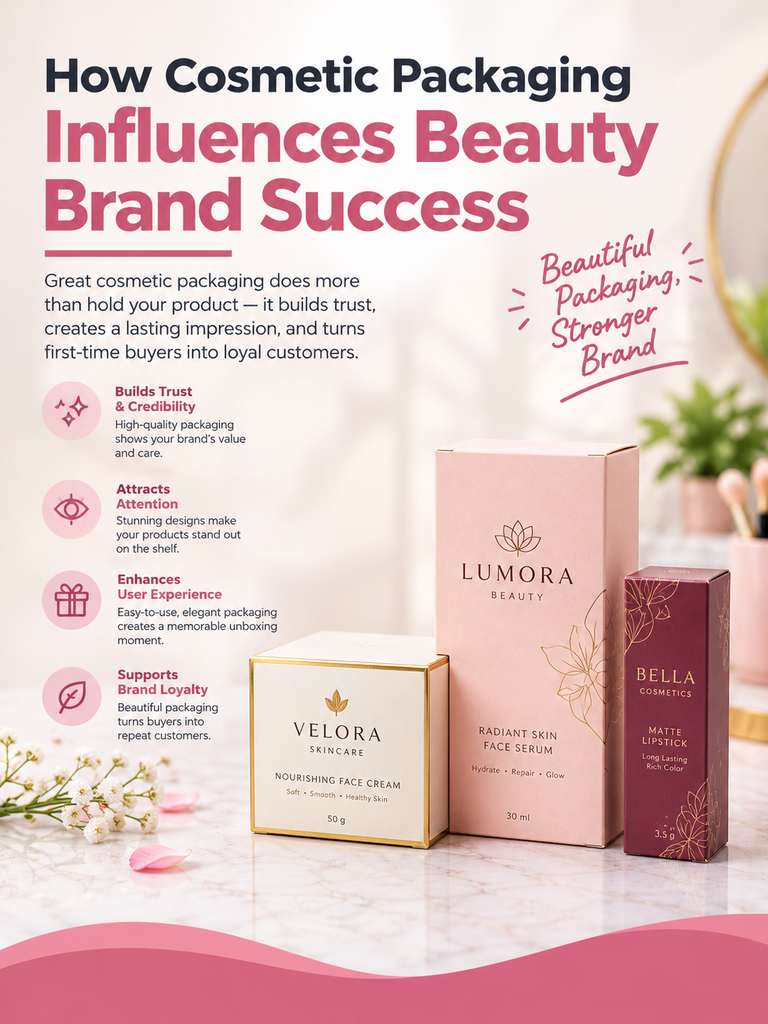
The beauty industry is built around quality, appearance, and customer trust. From skincare creams and facial serums to lipsticks and makeup palettes, every product needs packaging that suits its purpose. Customers often notice the outer box before they examine the product itself, making packaging an important part of the overall shopping experience.
For beauty businesses, packaging provides an opportunity to present products professionally while protecting them during storage and transportation. A carefully designed box can communicate a brand’s identity, organize essential product information, and create a consistent appearance across an entire product range.
The Importance of Packaging in the Beauty Industry
Custom cosmetic products packaging boxes come in different shapes, sizes, and materials. Some are packaged in glass bottles, while others use plastic tubes, jars, compact cases, or small containers. Each product requires packaging that accommodates its dimensions and protects it during normal handling.
A suitable box can help prevent unnecessary movement and reduce the likelihood of surface scratches or damage during transportation. It can also keep products organized on retail shelves and make storage easier for businesses.
Beyond practical benefits, packaging contributes to the way customers perceive a product. Clean printing, balanced colors, and an appropriate box structure can make a beauty item look more professional. Businesses should therefore consider packaging an essential part of product planning rather than simply an additional expense.
Choosing the Right Box for Different Cosmetics
Different beauty products have different packaging requirements. Lipsticks and lip glosses often fit into narrow cartons, whereas skincare jars and serum bottles may need wider boxes with enough internal support. Makeup palettes generally require a shape that accommodates their size while helping prevent unnecessary movement.
Perfumes and other products contained in glass bottles need particular attention because glass can break if subjected to impact. A properly fitted insert can help hold the bottle in place and reduce movement inside the box.
Beauty gift sets require another approach because several products may need to fit together in one package. Compartments can keep individual items organized and create a neat presentation when the customer opens the box.
Before choosing a packaging style, businesses should measure the actual product and consider any additional components. A suitable fit improves usability and helps avoid oversized packaging.
Building Brand Recognition Through Design
Packaging can help a beauty business establish a recognizable visual identity. Consistent colors, logos, typography, and graphic elements make it easier for customers to identify products from the same company.
For example, a skincare brand focused on simplicity might use neutral colors and minimal graphics. A makeup company targeting customers who enjoy bold styles may prefer brighter colors and expressive designs. Both approaches can work effectively when the packaging reflects the intended audience and product positioning.
Businesses should also consider how their boxes will appear across different sales channels. Packaging that looks consistent in physical stores, online product photographs, and customer deliveries creates a more unified brand presentation.
A strong design does not necessarily require complicated artwork. Sometimes a clear logo, readable product name, and carefully selected color palette are enough to create a professional result.
Selecting Suitable Packaging Materials
Material selection affects the strength, appearance, and overall functionality of cosmetic boxes. Paperboard is a common option for many retail products because it supports printing and can be manufactured in different shapes and sizes.
Kraft paperboard may suit brands that prefer a natural appearance, while smooth coated paperboard can support detailed graphics and vibrant colors. Rigid board offers a stronger structure and is often considered for premium beauty products, fragrance collections, and gift sets.
The right material depends on the product’s weight, packaging dimensions, handling conditions, and budget. Businesses should also consider whether the box will primarily be displayed in a store or transported through an e-commerce delivery network.
Choosing materials according to actual requirements helps balance appearance, product protection, and production costs.
How Printing and Finishing Improve Presentation
Printing and finishing techniques can give cosmetic packaging a distinctive appearance. Matte finishes create a subtle look, while glossy surfaces provide more shine and can make certain colors appear more vivid.
Other options include foil stamping, embossing, and spot UV. Foil stamping adds metallic details, embossing creates raised elements, and spot UV applies a glossy effect to selected areas of the design.
These techniques can be useful when a business wants to emphasize its logo, product name, or a particular visual feature. However, adding too many effects may make a design appear crowded.
A balanced approach usually works better. Businesses should select finishing options that complement their identity and remain appropriate for the product’s price range.
Protecting Products During Storage and Delivery
Cosmetics may pass through several stages before reaching the customer. Products can be stored in warehouses, moved between distribution centers, displayed in retail environments, and transported to individual homes.
Packaging should account for these conditions. A box that fits the product properly can help limit movement, while suitable inserts can provide additional support for bottles, jars, and other delicate items.
For online orders, businesses may need an outer shipping carton in addition to the individual cosmetic box. The retail box presents the product, whereas the shipping package provides another layer of protection during delivery.
Testing packaging with the actual product can help identify problems before production begins. Businesses can check whether the box closes securely, whether the product remains in position, and whether the packaging withstands routine handling.
Considering Sustainable Packaging Options
Environmental considerations are becoming an important part of packaging decisions. Some beauty businesses prefer recyclable paperboard, responsibly sourced materials, or designs that avoid unnecessary packaging components.
Selecting a material is only one part of the process. Companies should also consider how easily the complete package can be separated and recycled in the markets where it will be used.
For example, combining several different materials may complicate recycling if customers cannot separate them easily. A simpler design can sometimes make disposal more convenient while maintaining an attractive appearance.
Businesses should choose environmental claims carefully and verify that their packaging supports those claims. Practical decisions about material use, durability, and package dimensions can help reduce waste without compromising the product’s presentation.
Managing Packaging Costs Effectively
Packaging expenses can affect a beauty business’s overall budget, especially when a company sells several products in different sizes. Selecting a suitable box structure and standardizing certain design elements can help simplify purchasing and production.
Businesses should compare material options, printing requirements, order quantities, and finishing techniques before placing an order. They should also consider storage space and assembly requirements, as these factors can influence operational efficiency.
Ordering packaging without testing a sample can create avoidable problems if the dimensions or structure are unsuitable. Reviewing a prototype first allows businesses to identify changes before committing to a larger production run.
The objective is to find packaging that protects the product, supports the brand identity, and fits the available budget.
Conclusion
Custom packaging boxes an important role in product protection, brand recognition, and customer experience. From selecting suitable materials to choosing the right box dimensions and printing techniques, each decision contributes to the final presentation.
Beauty businesses should consider their products, target customers, storage requirements, and delivery methods when planning packaging. A well-designed box can keep products organized, communicate important information, and create a consistent appearance across a product range.
By balancing functionality, visual appeal, and cost, businesses can develop packaging that supports their products and helps establish a professional presence in the competitive beauty market.
