

Cricket has become an integral part of Indian culture. Millions of people follow the Indian Premier League (IPL), as well as national and international tournaments. More and more people are taking an interest in the statistics underpinning the matches, and with this, demand is growing for digital sports services where consumers can access statistics, results and tools for analysing matches. The betting market is a completely different service model to traditional bookmaking. It is becoming a popular form of betting because, in most cases, it effectively eliminates the involvement of a bookmaker and requires only interaction between the users themselves.
How betting odds work
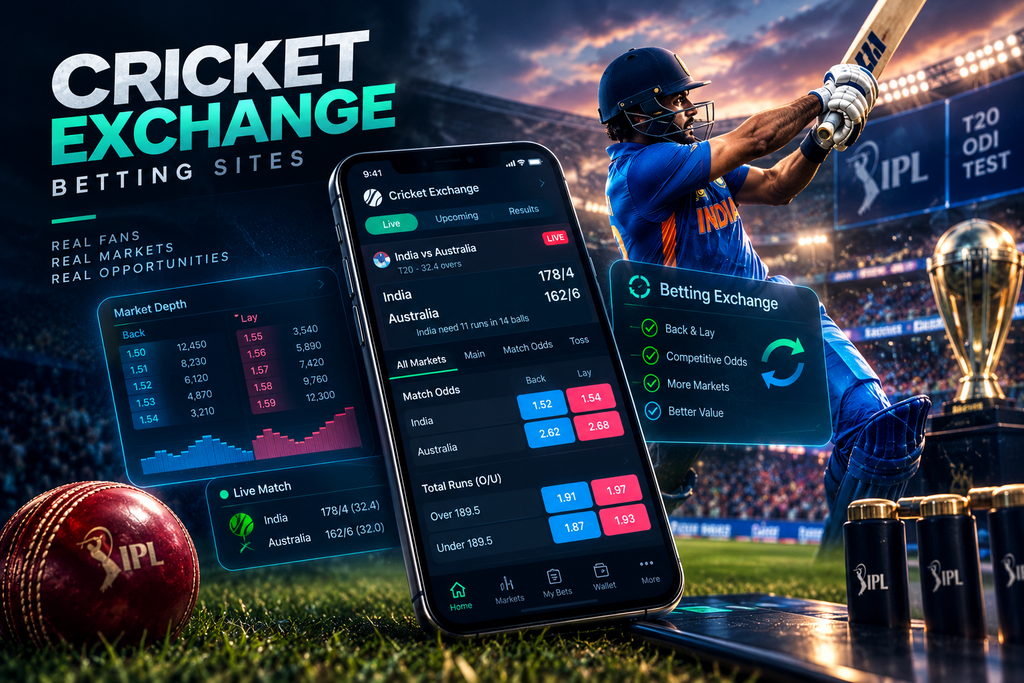
On cricket betting exchange sites, you can place bets online against other players, rather than with a bookmaker. These are online platforms where customers bet against each other, rather than directly against the bookmaker. Exchange participants set the odds so that other players can use them whilst playing, making the betting experience more enjoyable and lucrative.
Here’s how the key terms work:
- ‘Back’: A bet that an event will occur.
- ‘Lay’: A bet that an event will not occur.
- Odds: Set based on the offers made and accepted by users.
- Liquidity: The level of trading activity in the market.
- Matched bets: Bets for which both sides have been found.
Much like a financial market, the exchange reflects the activity and demand of its users.
Payment systems and digital wallets in India
One of the defining features of the Indian digital market is its well-developed electronic payments infrastructure. Mobile apps, bank transfers and national payment methods are popular in the country.
Among the best-known are:
- Universal Payments Interface (UPI): enables instant transfers of funds from one bank account to another.
- PhonePe: a highly popular app for digital payments and transactions via UPI.
- Google Pay: a mobile service for transferring funds and paying for purchases.
- Paytm: a digital platform offering tools for making payments and managing finances.
- RuPay: an Indian debit and credit card system.
- IMPS: an instant interbank payment service.
- NEFT: a system for electronic bank transfers.
Furthermore, thanks to its rapid development in recent years, UPI has become a particularly important platform. Transfers to a bank account or a virtual payment address can be made via a mobile app. The system operates round the clock and has radically simplified everyday financial transactions in the country.
First, let’s look at the exchange trading model
Within the exchange trading model, you can make opposing predictions that either influence other predictions or cancel them out.
The exchange trading model is based on the premise that traders hold opposing views. For example: one participant believes that the ‘Chennai Super Kings’ will win, whilst another holds the opposite view. Once the terms of the bet have been agreed, the exchange system matches the offers and finalises the transaction.
Key elements of the exchange model
- A clear understanding of how bets are placed and settled — two opposing positions
- Liquidity — your order adds to the available offers
- Odds fluctuations — changes in odds depending on market behaviour
- Matching of offers — the exchange platform automatically matches opposing offers. Even if you use it, the exchange model does not eliminate risk or guarantee higher returns.
What role does the betting exchange play for the Indian audience?
India has long been regarded as one of the world’s leading nations in cricket. Brazil and other countries around the world are known for the fact that cricket has become so widespread there that it has reached the level of a mass sport; there is a growing trend in the number of local tournaments, and the sport’s global influence is increasing thanks to the performances of the Indian national cricket team and the Indian Premier League (IPL) — all of which is largely driven by the sport’s success in India. Below are some specific areas where there is significant demand:
- The Indian Premier League (IPL): This is a competition featuring top-tier teams.
- International cricket: matches between national teams in international tournaments.
- T20 cricket: a much simpler, fast-paced format with fewer overs.
- Domestic cricket: national leagues and regional tournaments.
- For Indian fans, in-depth knowledge of the teams, players and results is extremely important: this is precisely why platforms offering sports statistics, live broadcasts and analysis have become so successful.
A comprehensive guide to assessing the quality of cricket betting platforms
To be sure of the quality of such digital services, it is not enough simply to browse the website; reliable information is also required.
Key aspects of your assessment
- Navigation. The platform should feature clear descriptions of sporting events and user-friendly navigation.
- Statistics. An online sports resource should include match results, detailed information about players and statistics on their performances.
- Data. During competitions, data is constantly changing — which is why you need real-time data.
- Security. You should pay attention to how personal data is protected and how clear the financial terms are.
- Support. Check whether quick and easy online support is available, and whether there are clear user guides.
The Future of Digital Cricket Platforms in India
India’s digital infrastructure is constantly evolving: technologies such as UPI, mobile banking and analytical tools are making sports information accessible at the touch of a button.
Further developments can be expected in the following areas:
Advanced analytics of sports statistics using artificial intelligence.
Convenient viewing of live scores displayed on screen.
Mobile apps featuring cricketers for cricket fans.
Updates to the user interface design.
Integration of sports data with digital services.
At the same time, the platforms’ financial operations must, of course, comply with current regulatory standards and ensure secure payment processing.
