

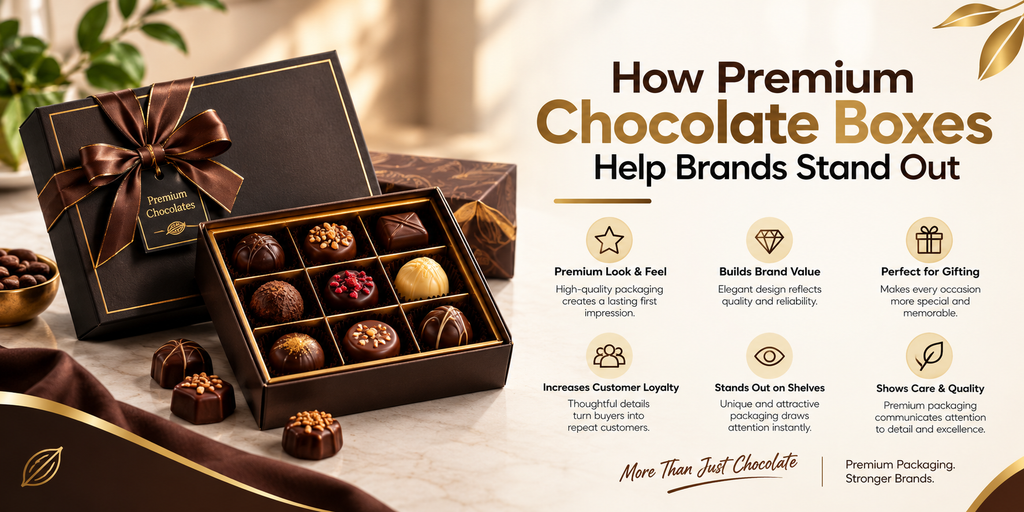
Chocolate is a popular choice for celebrations, personal gifts, corporate events, and everyday treats. Along with taste and quality, packaging plays an important role in how customers perceive a chocolate product. An attractive box can make a simple chocolate assortment feel more special while helping businesses present their products professionally.
For chocolate manufacturers, confectionery shops, and gift businesses, packaging serves several purposes. It keeps products organized, supports handling and transportation, and provides space for branding. Well designed chocolate boxes can also help businesses create a recognizable identity and deliver a memorable customer experience.
The Importance of Chocolate Packaging
Customers often notice packaging before they see the product inside. Colors, materials, shapes, and printed designs can influence their first impression and help communicate whether a product is intended for everyday enjoyment, a special occasion, or a premium gift.
For example, a chocolate collection presented in a sturdy box with elegant printing may be suitable for corporate gifting, while bright colors and playful illustrations may appeal to customers purchasing treats for children or celebrations.
Consistent packaging also helps businesses maintain a recognizable appearance across different product collections. By using coordinated colors, logos, and typography, chocolate brands can create a unified presentation across retail shelves, gift sets, and online orders.
Choosing the Right Box Style
Chocolate businesses offer products in different shapes, quantities, and price ranges. Selecting an appropriate box style helps accommodate these differences while creating a suitable presentation.
Rigid chocolate boxes are a popular option for premium assortments and gift collections because their sturdy construction provides a solid structure. Magnetic closure boxes offer a refined opening experience, while lid-and-base designs provide a classic presentation.
Sleeve-style boxes can create an attractive layered appearance, and compartmentalized packaging helps separate individual chocolates. Boxes with windows may allow customers to see the products before opening the package, provided the design meets the business’s protection and hygiene requirements.
The ideal structure depends on the chocolate assortment, product dimensions, intended use, and preferred presentation.
Protecting Chocolates During Storage and Delivery
Chocolate products can be sensitive to temperature changes, moisture, pressure, and rough handling. Packaging should therefore be selected with both appearance and product protection in mind.
A properly sized box helps prevent unnecessary movement during handling. Inserts and dividers can keep individual chocolates in position, reducing contact between pieces and helping maintain an organized arrangement. For assorted collections, separate compartments can also make it easier to display different flavors or shapes.
Businesses should remember that the outer box alone may not provide all the protection required for food products. Suitable inner trays, wrappers, liners, or other food-contact materials may be needed depending on the product and storage conditions.
Testing the complete packaging arrangement before shipping can help identify problems with fitting, movement, or handling.
Custom Printing for Stronger Brand Recognition
Custom printing allows chocolate businesses to communicate their identity through packaging. A logo, brand name, product description, and coordinated color palette can help customers recognize a product and distinguish it from competing options.
Minimalist designs with subtle typography may suit premium chocolate collections, while colorful graphics can work well for seasonal products and family-oriented gifts. Metallic details, decorative patterns, and carefully selected imagery can add visual interest without making the design feel overcrowded.
Businesses can also use the interior of a box to include a thank-you message, product information, or a short brand story. These details can make the opening experience feel more personal and give customers additional information about the chocolates they receive.
Premium Finishes That Improve Presentation
Finishing techniques can change how chocolate packaging looks and feels. The appropriate finish depends on the brand’s visual identity, budget, and intended customer.
Foil stamping can highlight logos or selected text with metallic details. Embossing creates raised elements, while debossing presses designs into the surface. Matte lamination provides a smooth, understated appearance, whereas gloss finishes create a more reflective look.
Soft-touch finishes can introduce a velvety texture, and spot UV can emphasize particular areas of a printed design. These techniques are especially useful for gift collections and premium assortments where presentation is an important part of the purchase.
Using finishes selectively can help maintain a balanced design and keep attention on the product and brand.
Chocolate Boxes for Gifts and Special Occasions
Chocolate is commonly purchased for birthdays, weddings, anniversaries, holidays, and business events. Packaging can be adapted to suit each occasion without requiring a completely different product.
For Valentine’s Day, brands may choose romantic colors and decorative details. Holiday collections can use seasonal illustrations, while wedding favors may feature personalized names, dates, or coordinated event colors.
Corporate chocolate gifts can include company branding, personalized messages, and neatly arranged assortments. Custom dimensions and inserts can help businesses combine several chocolate varieties in a single package while keeping the contents organized.
A flexible packaging design allows brands to introduce limited-edition collections and seasonal products while maintaining a consistent identity.
Selecting Suitable Materials
The choice of packaging material affects appearance, structure, cost, and environmental considerations. Paperboard is commonly used for printed retail packaging, while rigid chipboard can provide a stronger structure for premium gift boxes.
Kraft-style materials offer a natural appearance that may suit brands seeking a simple or rustic presentation. Coated and textured papers provide additional design possibilities, allowing businesses to match the exterior of a box with their preferred visual style.
Material selection should also consider the intended use of the package. Any surface or component that directly contacts chocolate must be suitable for food contact under the applicable requirements. Businesses should confirm the suitability of liners, coatings, adhesives, and other materials rather than assuming that every packaging option is appropriate for direct food contact.
Recyclability should be evaluated across the complete package, including laminations, inserts, windows, and decorative additions.
Creating a Memorable Unboxing Experience
Opening a gift can be an important part of receiving it. A well-organized chocolate box builds anticipation and presents the contents in a deliberate arrangement.
Custom inserts help position individual pieces, while ribbons, sleeves, and magnetic closures can add a distinctive touch. Interior printing and personalized messages can further strengthen the presentation without changing the chocolates themselves.
For online chocolate businesses, this experience can be particularly valuable because customers cannot examine the product before delivery. A thoughtfully designed package helps create a professional impression when the order arrives and may encourage customers to consider the brand for future purchases.
However, attractive packaging should remain practical. The box should open easily, protect its contents, and be convenient to store or transport.
Why Custom Chocolate Boxes Matter for Small Businesses
Custom packaging is not limited to large chocolate manufacturers. Independent chocolatiers, local confectionery stores, online gift sellers, and growing food businesses can also benefit from packaging designed around their products.
A small business might begin with a simple box design and introduce additional sizes or finishes as its collection expands. Using consistent branding across different packages can help maintain a recognizable appearance without making every product look identical.
When comparing packaging options, businesses should consider order quantities, production costs, storage space, product dimensions, and delivery requirements. Ordering a sample before committing to a larger production run can help confirm the size, finish, and overall construction.
Working with a packaging supplier that offers customization can make it easier to develop a design suited to the business’s needs.
Choosing Custom Chocolate Boxes from The Rigid Boxes
The rigid packaging boxes provide customizable packaging solutions for businesses looking to combine product protection with professional presentation. Its chocolate box options include choices for materials, printing, finishes, and custom inserts, allowing brands to develop packaging suited to different assortments and gifting requirements.
When planning a packaging project, businesses should provide accurate product dimensions, the number of chocolates in each box, and details about how the products will be stored or shipped. They should also communicate their branding preferences and any requirements concerning inner packaging.
Reviewing a digital proof or physical sample can help confirm the artwork, dimensions, structural strength, and fit before full production begins. Careful planning makes it easier to create packaging that reflects the brand while serving practical business needs.
Conclusion
Chocolate packaging contributes to product presentation, organization, and the overall customer experience. The right box can help protect an assortment, communicate a brand’s identity, and make chocolate gifts feel more considered and memorable.
From sturdy rigid structures and fitted inserts to custom printing and premium finishes, businesses have several ways to develop packaging that suits their products and customers. By balancing appearance, protection, material suitability, and cost, chocolate brands can create packaging that supports their products and strengthens their professional image.
