

Have you ever stopped mid-sentence and wondered whether you should write “shined” or “shone”? You’re not alone. Many English learners and native speakers hesitate between these two forms because both come from the verb “shine.” The real question is, shined or shone whats the difference? The answer depends on how you use the verb and what you mean. Once you understand the basic rule, choosing the right form becomes much easier.
You may also wonder, is it shined or shone when describing light, a polished object, or someone’s appearance. Both forms can be correct in different situations. However, they don’t always work in the same sentence. Understanding their common uses will help you sound more natural and confident.
In this guide, you’ll also explore words from shined and related forms. We’ll look at simple examples, grammar rules, and everyday situations. By the end, you’ll know which form fits your sentence.
Shined or Shone: What’s the Difference?
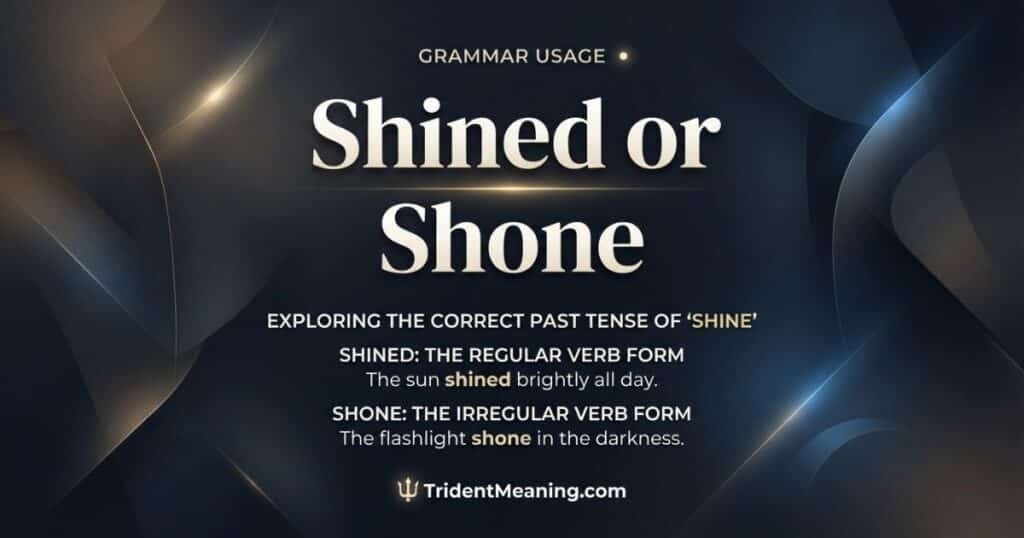
The main difference between shined and shone comes down to how you use the verb shine. In many situations, shined describes an action where someone makes an object polished or shiny. For example, “She shined her shoes before the interview.” Here, she actively worked on the shoes.
Shone, on the other hand, commonly describes light that came from or reflected off something. You might say, “The moon shone through the clouds.” In this sentence, the moon isn’t polishing anything. It is giving off light. Both forms are legitimate, but the meaning and sentence structure help you choose the right one.
Shined or Shone in UK English
British English often favors shone when talking about light, brightness, or something that glows. For example, “The stars shone brightly above the village.” This describes natural light rather than an action performed to polish something.
However, shined can still appear in British English when someone deliberately makes an object shiny. “He shined his boots before the ceremony” focuses on polishing. So, the choice isn’t simply about American versus British English. Context matters more than the variety of English you’re using.
Shined or Shone for a Person
When you’re talking about a person, the correct form depends on what that person actually did. If someone performed an action to polish an object, shined can fit naturally. For example, “Marcus shined his shoes before meeting the client.”
If you’re describing someone appearing especially impressive, talented, or radiant, shone may be more appropriate. For example, “She shone during the presentation.” Here, the meaning isn’t about physical light. It suggests that she performed exceptionally well or stood out.
The Sun Shined or Shone: Which Is Correct?
When describing sunlight, shone is normally the natural choice. You would say, “The sun shone brightly all afternoon.” The verb describes light coming from the sun, so shone fits the meaning.
You wouldn’t normally use shined simply to describe the sun giving off light. Compare these sentences:
- The sun shone through the window.
- The sun shone over the mountains.
- The morning sun shone brightly.
In each example, the subject produces or provides light. That’s the key clue.
Shined a Light or Shone a Light?
This expression can be confusing because both forms may appear in real English. When someone directs a light somewhere, shone is a traditional and widely accepted form. For example, “He shone a flashlight toward the doorway.”
However, shined is also used in some varieties of English, particularly when speakers treat shine as a regular verb in this sense. You may encounter sentences such as “She shined a flashlight into the basement.”
So, don’t assume that every sentence containing a flashlight must use one form. Consider the variety of English and the intended meaning.
Stars Shined or Shone: Which Sounds Right?
For stars producing visible light, shone is the more natural choice. You could write, “The stars shone brightly across the clear night sky.” The sentence describes their light rather than an action someone performed.
Similarly, these examples sound natural:
- The stars shone above the ocean.
- Bright stars shone through the darkness.
- The stars shone clearly after the storm.
Using shined here can sound awkward because nobody is polishing or deliberately making the stars brighter.
What Does Shone Mean?
Shone is a past-tense form of shine. It commonly means that something gave off light, appeared bright, or reflected light. The exact meaning depends on the sentence.
For example, “The lamp shone across the room” means the lamp produced light. Meanwhile, “Her face shone with happiness” uses the word more figuratively. It suggests that her happiness was clearly visible.
You can also use shone for things that reflect light. A sentence such as “The silver necklace shone under the lamp” describes its bright appearance rather than an act of polishing.
How Do You Pronounce Shone?
Shone has a different pronunciation from shined. It generally sounds like the word shown, with the same basic vowel sound. Shined has a long “i” sound, similar to the vowel sound in “time.”
This difference matters when speaking English because the two forms can sound noticeably different. If you’re learning English, listening to both words in complete sentences can make the distinction easier to remember.
A useful memory trick is to connect shone with words such as “shown” when practicing pronunciation. Just remember that their meanings are completely different.
Eyes Shined or Shone: Which Form Is Correct?
When describing eyes that looked bright or radiant, shone is usually the better choice. For example, “Her eyes shone with excitement.” The sentence describes an appearance or emotional glow.
You can also say, “His eyes shone in the sunlight.” Again, the eyes are reflecting or appearing bright.
However, if someone physically polished or treated an object related to the eyes, the meaning would change. The important point is to ask yourself whether shine describes light or an intentional action. That simple distinction often resolves the confusion.
Shined or Shone Examples in Everyday English
Everyday examples make the difference much easier to remember. Think about whether the subject is making something shiny or giving off or reflecting light.
Here are some quick comparisons:
- She shined her leather shoes before work.
- The moon shone through the clouds.
- He shined the silverware until it looked polished.
- The stars shone above the lake.
- The sunlight shone through the curtains.
- Daniel shined his boots for the ceremony.
The first group focuses on a deliberate polishing action. The second describes light, brightness, or reflection.
Examples of Shined in a Sentence
Shined works well when the sentence focuses on making something brighter, cleaner, or more polished.
For example:
- I shined my shoes before the wedding.
- She shined the kitchen floor until it looked spotless.
- He shined his boots for the formal event.
- We shined the old silver before putting it on the table.
In each sentence, someone actively works on an object. That action-oriented meaning is the easiest way to recognize shined.
Examples of Shone in a Sentence
Use shone when something gave off light, reflected brightness, or appeared radiant.
For example:
- The sun shone through the bedroom window.
- The moon shone over the quiet lake.
- Her eyes shone with excitement.
- The stars shone brightly after sunset.
- A flashlight shone across the dark hallway.
Notice that these examples don’t describe someone polishing an object. Instead, they focus on light or a bright appearance.
Is Shine a Verb, Noun, or Adjective?
Shine can function as a verb or a noun, depending on how you use it. As a verb, it describes producing light, reflecting light, or making something bright. For example, “The lamp shines across the room.”
As a noun, shine can describe brightness or a glossy appearance. For example, “The polish gave the table a beautiful shine.” The word shiny is an adjective, while shining can work as a participle or adjective depending on the sentence.
Understanding these forms helps you avoid treating shined and shone as interchangeable words in every situation.
What Type of Verb Is Shine?
Shine has multiple verb forms, and its past forms can vary according to meaning and usage. Traditionally, shone is associated with the intransitive sense of giving off or reflecting light, while shined is commonly used for the transitive sense of polishing or making something shiny.
For example, “The moon shone brightly” describes light. In contrast, “She shined her shoes” describes an action performed on an object.
This distinction gives you a practical way to remember the difference without memorizing complicated grammar terminology.
Shined or Shone in Grammar: When Should You Use Each?
The easiest grammar rule is to look at the role of the subject. If the subject is actively making something shiny or polished, shined often works. If the subject itself is emitting, reflecting, or appearing to give off light, shone is generally the natural choice.
For example, “Tom shined his shoes” shows Tom performing an action. But “The moon shone brightly” describes what the moon did naturally.
Keep in mind that actual usage can vary by dialect and context. Some speakers use shined more broadly, especially with expressions such as directing a flashlight. So, grammar isn’t always as rigid as a single memorized rule might suggest.
Past Tense and Past Participle of Shine
The verb shine has more than one commonly encountered past form. Shone is traditionally used for the past tense when talking about emitting or reflecting light. Shined is commonly used when someone deliberately polishes or makes something shine.
Examples include:
- Present: The sun shines brightly.
- Past: The sun shone brightly yesterday.
- Action: She shined her shoes yesterday.
- Present action: She shines her shoes regularly.
When you’re unsure, focus on the meaning before choosing the verb form. Ask whether you’re describing light or an action performed to create shine. That question will usually point you in the right direction.
FAQs About Shined or Shone
Is shined or shone the correct past tense of shine?
Both forms can be correct, but shone commonly describes light, while shined often describes polishing or making something shiny.
Is it correct to say the sun shined?
For natural English usage, the sun shone is the usual choice when describing sunlight produced by the sun.
Should I say the stars shined or shone?
Use shone when describing stars giving off or appearing to give off light, such as “The stars shone brightly.”
Is shined a real word?
Yes, shined is a valid form of shine, especially when someone deliberately polishes or makes an object bright.
What is the difference between shined and shone?
Shined commonly focuses on making something shiny, while shone usually describes emitting, reflecting, or appearing to give light.
Can you say shone a flashlight?
Yes, shone can describe directing a flashlight toward something, although shined also appears in some English varieties.
What does shone mean in a sentence?
Shone usually means gave off light, reflected brightness, or appeared radiant, depending on the surrounding context and sentence.
Choosing between shined or shone whats the difference is easier once you focus on meaning. Shone usually describes light, brightness, or something appearing radiant. Shined
CONCLUSION
Understanding shined or shone whats the difference is much easier once you focus on meaning. Use shone when something gives off, reflects, or appears to give light. Use shined when someone deliberately makes something bright or polished. Context is the key, so don’t rely on one rule for every sentence. This simple distinction can make your English sound more natural.
If you’re still asking is it shined or shone, look at the action first. A person can shine shoes, while the sun, moon, or stars usually shone. Learning common words from shined can also help you recognize related forms and use them confidently in everyday writing and conversation.
With practice, choosing between these verb forms becomes almost automatic. Remember that English usage can vary by context and dialect. When you’re unsure, check what shine means in your sentence. That small step will usually show you whether shined or shone fits better.